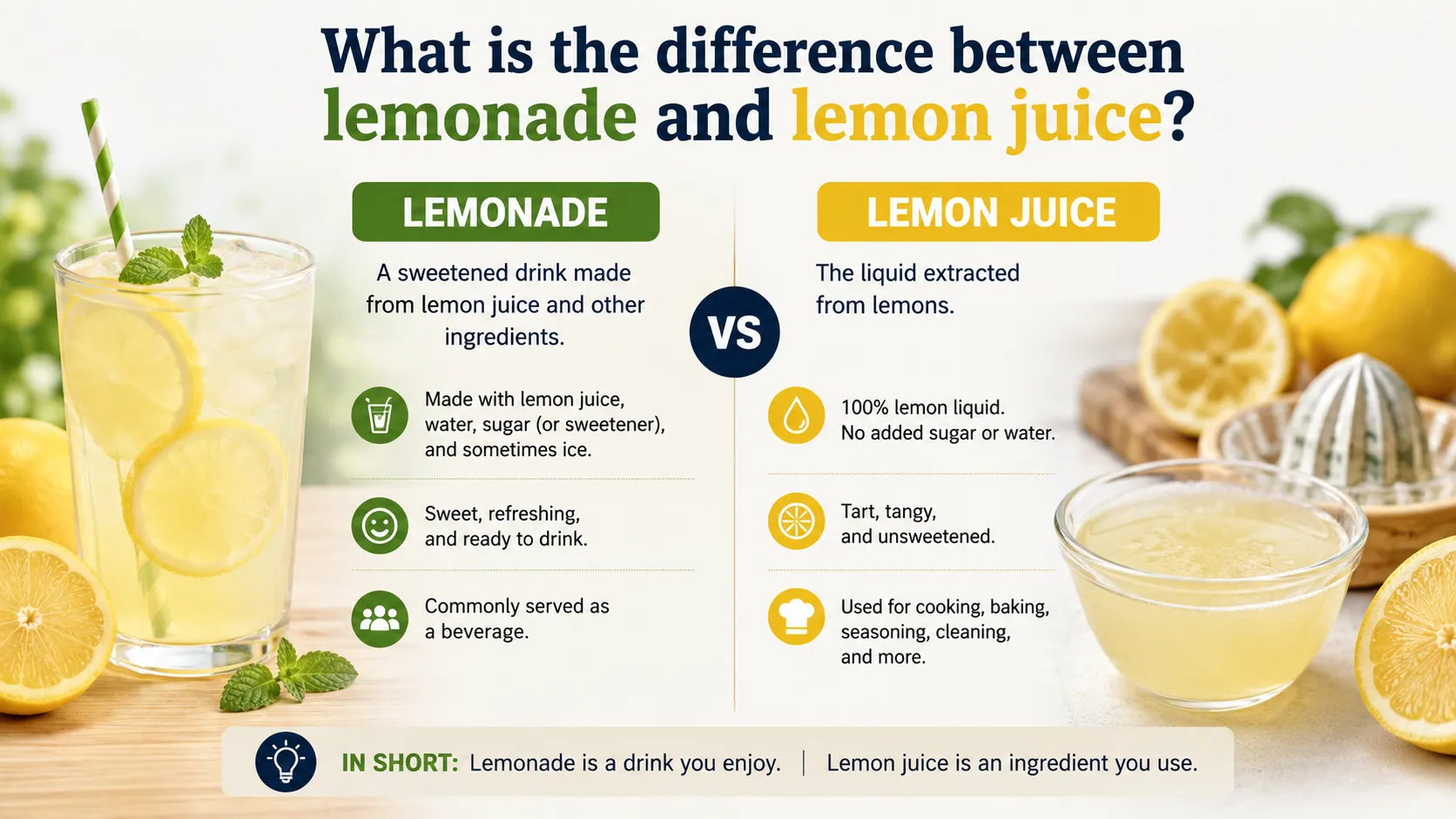
Discover the **difference between lemonade and lemon juice** and learn why these two lemon-based products are not the same. Although both come from lemons, they differ in ingredients, taste, concentration, preparation, and everyday uses. Lemon juice is the natural liquid extracted from fresh lemons. It has a strong, sour, and acidic flavor and is commonly used as an ingredient in cooking and baking. It can add citrus flavor and acidity to salad dressings, sauces, marinades, desserts, and other recipes. Lemonade, on the other hand, is a prepared beverage. It is typically made by combining lemon juice with water and a sweetener such as sugar. The added water dilutes the strong acidity of lemon juice, while the sweetener creates a balanced sweet-and-sour taste. Because of this, lemonade is generally enjoyed as a refreshing drink rather than used as a concentrated cooking ingredient. Another important difference is substitution. Lemon juice and lemonade usually cannot be used interchangeably in recipes because lemonade contains additional water and sweetener. Using lemonade where a recipe calls for lemon juice may change the flavor, sweetness, acidity, and texture of the finished dish. The meaning of lemonade can also vary by region. In some countries, lemonade may refer to a carbonated lemon-flavored drink rather than the traditional still beverage made from lemon juice, water, and sugar. Understanding the **difference between lemonade and lemon juice** can help you choose the right option for drinks, cooking, baking, and recipes. In simple terms, lemon juice is primarily a versatile lemon ingredient, while lemonade is a prepared beverage designed to be refreshing and easy to drink.
Topics