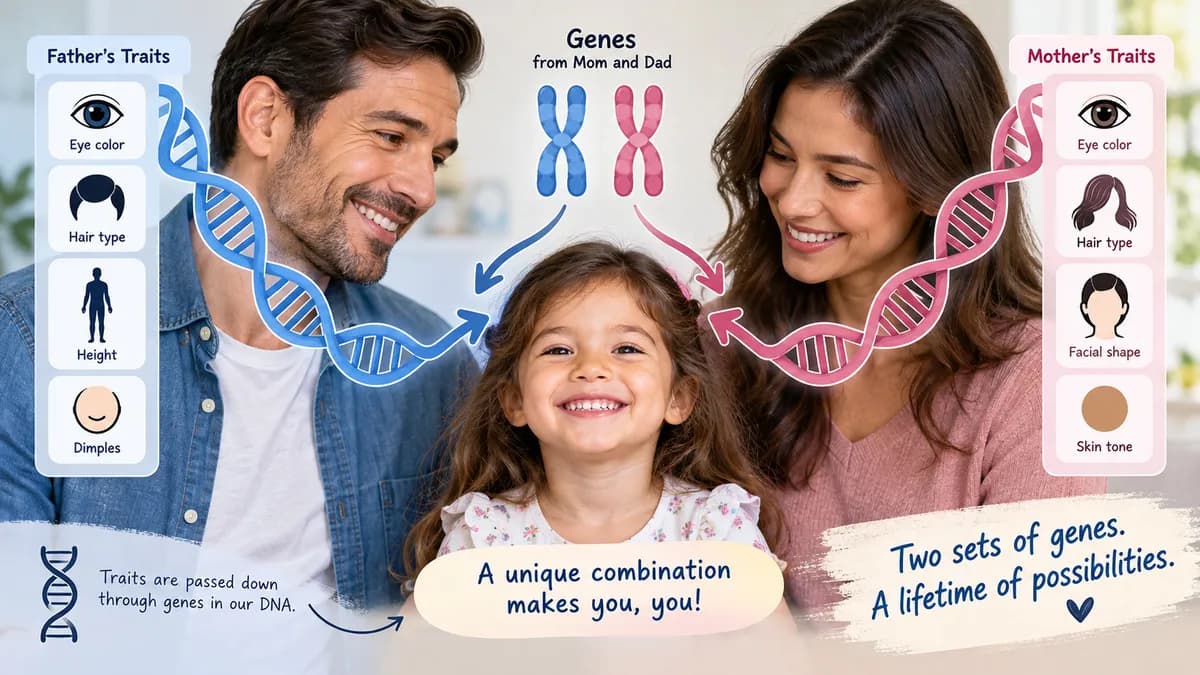
Have you ever wondered how the characteristics of mother and father are inherited by a child? The answer lies in genetics, DNA, genes, and chromosomes. A child receives genetic material from both biological parents, creating a unique combination of inherited characteristics. These genes can influence many features, including eye colour, hair type, skin pigmentation, height, facial features, blood group, and other aspects of physical development. During reproduction, the egg and sperm each contribute 23 chromosomes. When they combine during fertilisation, the child normally receives a total of 46 chromosomes. The resulting combination of genetic variants helps determine many of the child's characteristics. However, inheritance is not always simple. Some characteristics are influenced by multiple genes, while others can be affected by environmental factors such as nutrition, lifestyle, and surroundings. This also explains why siblings can look different even though they have the same biological parents. Each child inherits a different combination of genetic material, making every individual genetically unique. Understanding how traits are passed from parents to children provides valuable insight into family resemblance and human development. Explore how genes, DNA, and chromosomes work together to explain inherited characteristics and discover why children may share features with their parents while developing their own unique combination of traits.
Topics