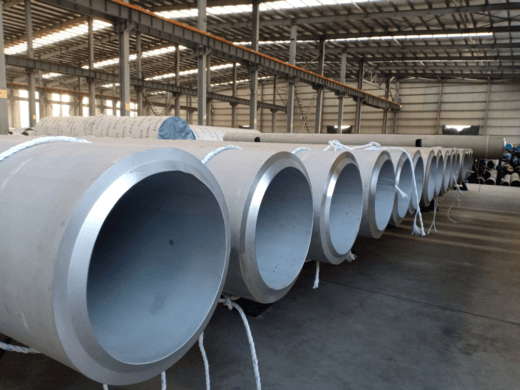
Stainless steel is a high alloy steel that is resistant to corrosion and has a beautiful surface without surface rust prevention treatment such as color plating or paint. Generally speaking, stainless steel is a general term for stainless steel and acid-resistant steel. Stainless steel refers to the corrosion-resistant steel in the atmosphere and weak corrosive medium. If the corrosion rate is less than 0.01mm/a (mm/year), it is considered as "complete corrosion resistance"; if the corrosion rate is less than 0.1mm/a, it is considered as "corrosion resistance"; if the corrosion rate is greater than 0.1mm/a, it is considered as "no corrosion resistance". Acid-resistant steel refers to the steel that can resist corrosion in various strong corrosive media. If the corrosion rate is less than 0.1 mm/a, it is considered as "complete corrosion resistance"; if the corrosion rate is less than 1.0 mm/a, it is considered as "corrosion resistance"; if the corrosion rate is greater than 1.0 mm/a, it is considered as "no corrosion resistance". The corrosion resistance of stainless steel is directly related to the chromium content in the steel. The presence of chromium forms an invisible film on the surface of the steel, which can prevent oxidation and make the material "passive" or corrosion-resistant. The addition of other elements such as nickel and molybdenum can improve corrosion resistance, strength and temperature resistance. According to the metallographic structure, the common stainless steel is divided into three categories: austenitic stainless steel, ferritic stainless steel and martensitic stainless steel. Austenitic stainless steel, as its name implies, is a stainless steel with an austenitic structure with a face-centered cubic crystal structure at room temperature. Its main alloy elements are chromium (Cr) and nickel (Ni), of which the content of chromium is about 18% and the content of nickel is between 8% and 25%. This unique combination of components gives austenitic stainless steel the characteristics of non-magnetic, high toughness and plasticity, and also makes it a metal material with excellent corrosion resistance. When containing Mo, Cu and other elements, it can also resist the corrosion of sulfuric acid, phosphoric acid, formic acid, acetic acid, urea and other pickling media. Austenitic stainless steel has become an indispensable material in modern industry because of its excellent performance and wide range of applications. Austenitic stainless steel plays an important role with its unique charm in the fields of chemical industry, ocean engineering and biomedicine. Martensitic stainless steel contains 11.5% ~ 18% of chromium, 0.08% ~ 1.2% of carbon, and less than 2% ~ 3% of other alloying elements. They exist as austenite at high temperature and transform into martensite after proper cooling to room temperature. However, the steel often contains a certain amount of retained austenite, ferrite or pearlite. Martensitic stainless steel is characterized by high hardness, strength, wear resistance, good fatigue resistance and certain corrosion resistance. Martensitic stainless steels are well suited for aerospace, defense, and power hand tools because of their wear resistance, strength, and corrosion resistance. Ferritic stainless steels generally do not contain nickel, but contain 12% ~ 30% chromium, and some contain a small amount of molybdenum, titanium or niobium, which have good oxidation resistance, corrosion resistance and chloride corrosion fracture resistance. Ferritic stainless steel can be divided into low chromium, medium chromium and high chromium according to the content of chromium. Among them, the chromium content of low chromium ferritic stainless steel is 11% to 14%, which has good toughness, plasticity, cold deformability and weldability. The chromium content of medium chromium ferritic stainless steel is 14% ~ 18%, which has good corrosion resistance and rust resistance. The high chromium ferritic stainless steel contains 18% ~ 30% chromium, has good oxidation resistance, can be used continuously at 980 ℃, and can be used to manufacture industrial furnace parts. Although ferritic stainless steel is not as strong as martensitic stainless steel, it has high corrosion resistance. Compared with austenitic stainless steel, ferritic stainless steel does not add expensive nickel and is cheap. Because of its good cold formability, ferritic stainless steel is easy to design and process. It is usually used in kitchen utensils, industrial machinery and automotive industry. Sinosteel Stainless Steel Pipe Technology (Shanxi) Co., Ltd. is the manufacturer of Stainless Steel Pipe and Special Alloy Pipe. Steel pipes with an outer diameter from 8mm to 3600mm, with wall thicknesses from 0.2mm to 120mm. Factory covering an area of 333,000 square meters. Production capacity reaches 200,000 tons.
Topics